Writings
Thoughts on AI engineering, flow metrics, building products, and lessons from 25+ years in tech.
The agent architecture that will define 2026.
I hear people calling OpenClaw sentient... an agent called its owner at 3am.
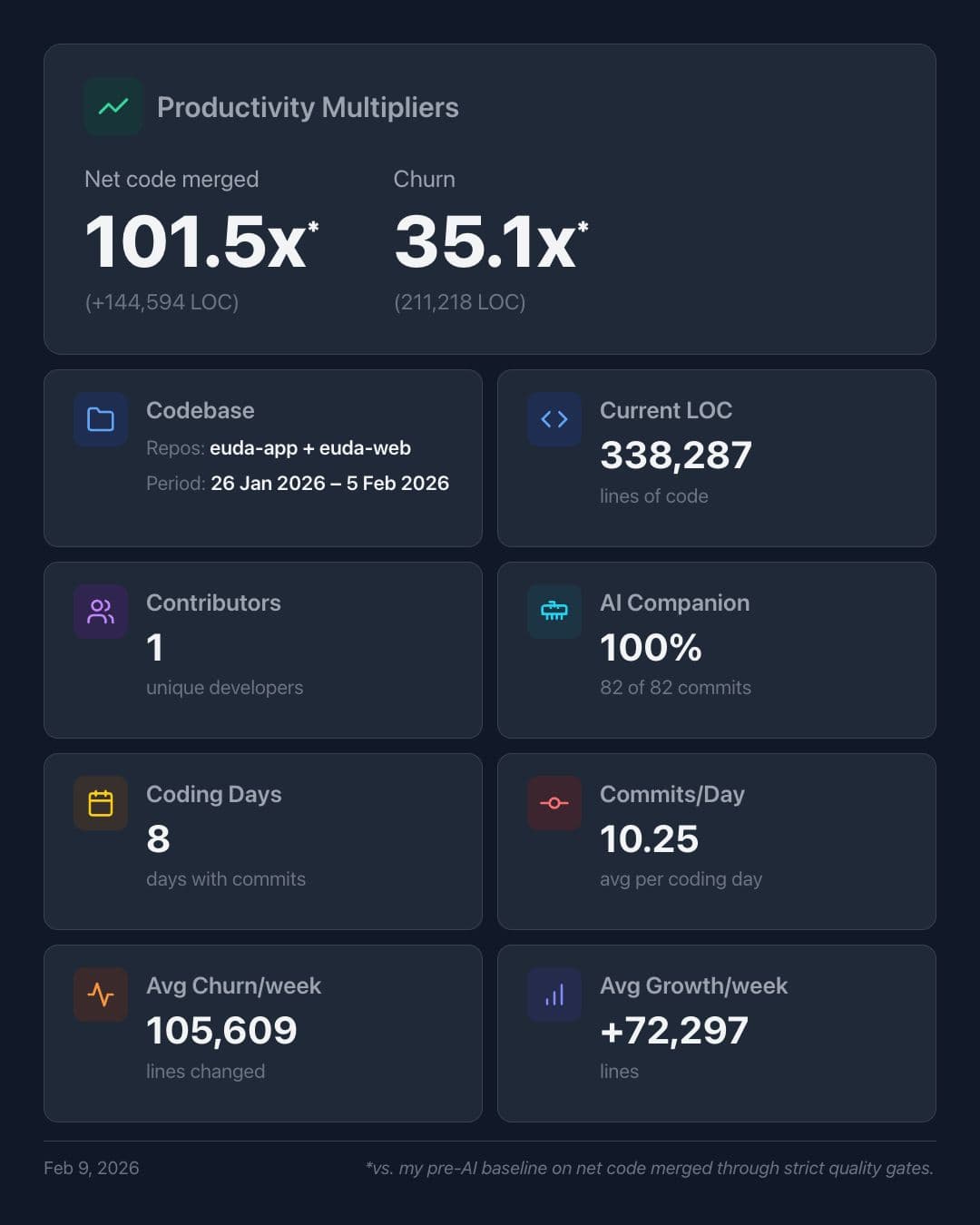
☕️🧘 Same workflow.
22.5× → 101.
Anthropic and OpenAI just dropped their new flagship coding models.
Same day. Same target.
161,000 GitHub stars.
OpenClaw became the fastest-growing open-source project ever. Developers are buying Mac minis specifically to run a personal AI agent with root access to their digital life.
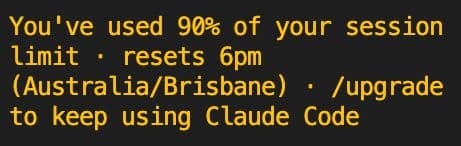
If you're not maxing out your Claude Max subscription every time, you're leaving value on the table.
🌶️ “Spec-driven development + autonomous agents” is just Waterfall 2.0.
Yes, I'll keep banging on it. We saw the news that Cursor ran long-running coding agents for close to a week on a single project and ended up with a browser rendering engine from scratch (HTML parser, CSS cascade, layout/rendering, etc.
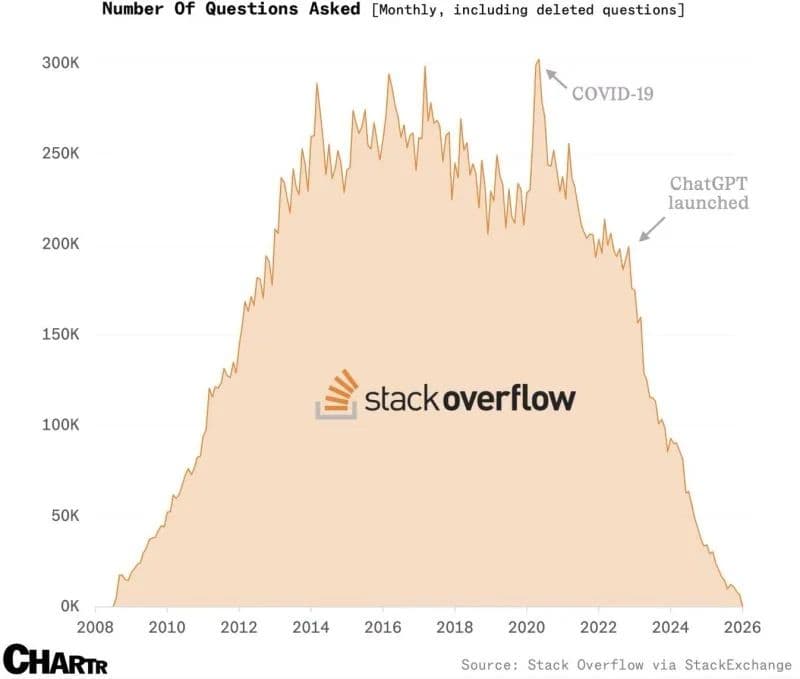
🪦 That chart reads like a gravestone.
Stack Overflow didn’t “dip”. It effectively closed as a daily habit, and the timing lines up perfectly with AI going mainstream.
spicy take: Pull Requests are a nonsense ritual — and AI just exposed it.
It's interesting to see people panicking in my feed about “AI generating too many PRs to review”. My view: that’s not the real problem.
🚨 Trap alert: don’t mix workflow automation (n8n et al.) with AI-native SDLC.
At first glance, they look the same. In practice, they create very different ceilings.
OpenAI made three big moves in one week.
1. They shared updated revenue numbers and framed revenue as effectively tracking compute 1:1, implying their growth bottleneck is capacity.
⏱️ 10 days.
That’s how long it took Anthropic to go from observing unexpected user behaviour → to shipping Claude Cowork. 🔥 Over the Christmas break, Claude Code went properly viral.
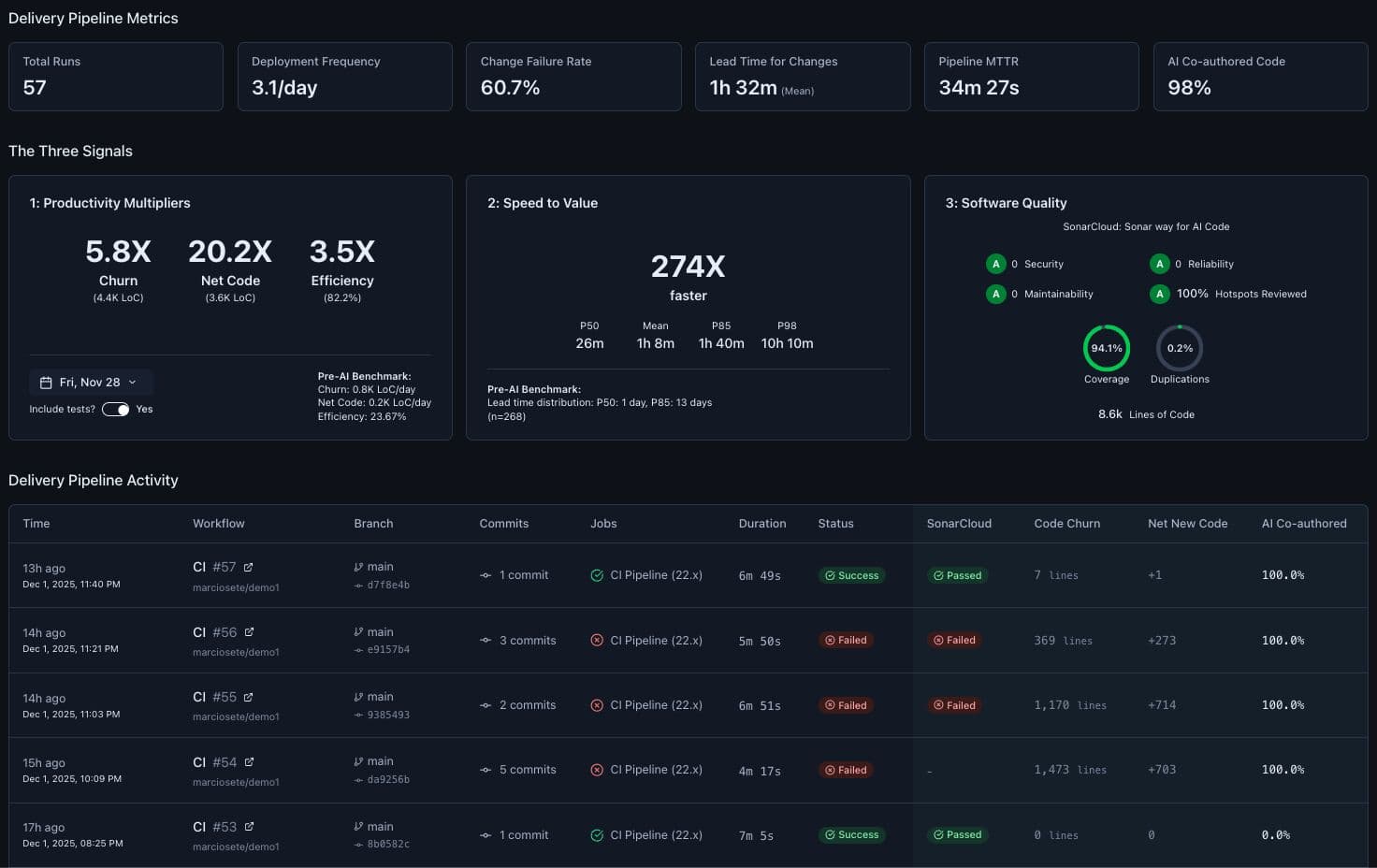
Curious?
Tomorrow I’m running a live agentic coding lab – leveraging fleets of coding agents to build from scratch with the audience, under brutal quality gates. 👉 Supporters and haters welcome.

📈 22.5× more merged code.
⏱️ Lead time collapsing from days to minutes. 🛡️ Quality gates most enterprise teams would fail.
4 strategic drivers for 2026 AI Strategies 👇
Yesterday I was with the CIO and his AI top dogs at a fast-moving Australian organisation, discussing how we could help them run an evidence-backed pilot to bring frontier agentic-coding results into their environment. Over the last few months, I’ve had the opportunity to read a lot of 2026 AI Strategy decks and roadmaps.
Sam Altman's leaked internal note and the AI race
Matthew Berman shared a very sharp breakdown on the evolving AI race and why Google may now be the best-positioned player. 📝 This was on the back of a leaked internal note to the OpenAI team, Sam Altman reportedly: - Acknowledged that Google has “caught up” and that Gemini will create real economic headwinds - Warned of “rough vibes ahead” as the performance gap closes - Admitted OpenAI has to do three hard things at the same time: be the best research lab, the best AI infrastructure company, and the best AI product platform – and still said he wouldn’t trade positions with any other company 💡 Matthew's core insight: this is no longer a “who has the best model?
Claude Opus 4.5 just dropped.
Last week, it was Gemini 3 and GPT‑5.1 Codex Max.
Last week in AI was just craazzyyy.
1️⃣ Google’s Gemini 3 + Antigravity IDE Google didn’t just ship a strong new frontier model. They’re going after the whole developer ecosystem with Antigravity, a new VS Code fork optimised for agentic workflows.
Agentic AI is no longer a thought experiment.
IDC (in research sponsored by Amazon Web Services (AWS)) just published new data on how organisations are actually using agentic AI. A few highlights that jumped out at me 👇 🔹 Adoption vs reality - 23% expect full deployment of agentic AI in the next 12 months - 65% expect to get there by 2027 - But only 3% are scaling agentic AI across departments today Everyone believes there’s a productivity prize here.
Andrew Ng just drew a line in the sand for engineers.
In an interview a couple of days ago, he laid out a hierarchy of engineering talent in the AI era: 1️⃣ Top tier: Experienced engineers (10–20+ years) who’ve gone all-in on AI and use it as a force multiplier. They move faster than anything we've seen.
Yesterday, we were all talking about Gemini 3 as the new #1 model.
Today, OpenAI drops two new GPT‑5.1 models: 👉 GPT‑5.
Everyone’s posting charts about Gemini 3 being “the number one model”.
You know I love benchmarks, but as a builder, I'm more interested in what's under the hood. 👉 Gemini 3 is the first model in a while that feels like a clear #1 across the hardest benchmarks, and it’s already wired into real user surfaces.
Since my post last Friday, a lot of engineers have been asking some version of: “How do I get an AI job so I can work...
My answer: instead of looking for AI jobs out there, how do you turn your current job into an AI-native job? For most engineers (and most knowledge workers too), that’s where the real upside is atm.
Agents X Junior X Senior Engineers 👇
During some recent conversations, a few people said something along the lines of: “So basically you’ve automated the work of junior engineers, not senior engineers.” At first, that didn’t sit right with me.
Everyone’s talking about how “warm” ChatGPT 5.1 feels.
ChatGPT 5.1 is the most agentic model OpenAI has shipped so far.
Is Andrej Karpathy wrong about agentic coding?
A recent clip from his interview with Dwarkesh Patel has been doing the rounds. In it, he calls current coding agents “not net useful” for his nanochat repo – and a lot of people have since quietly updated their beliefs about what’s possible.
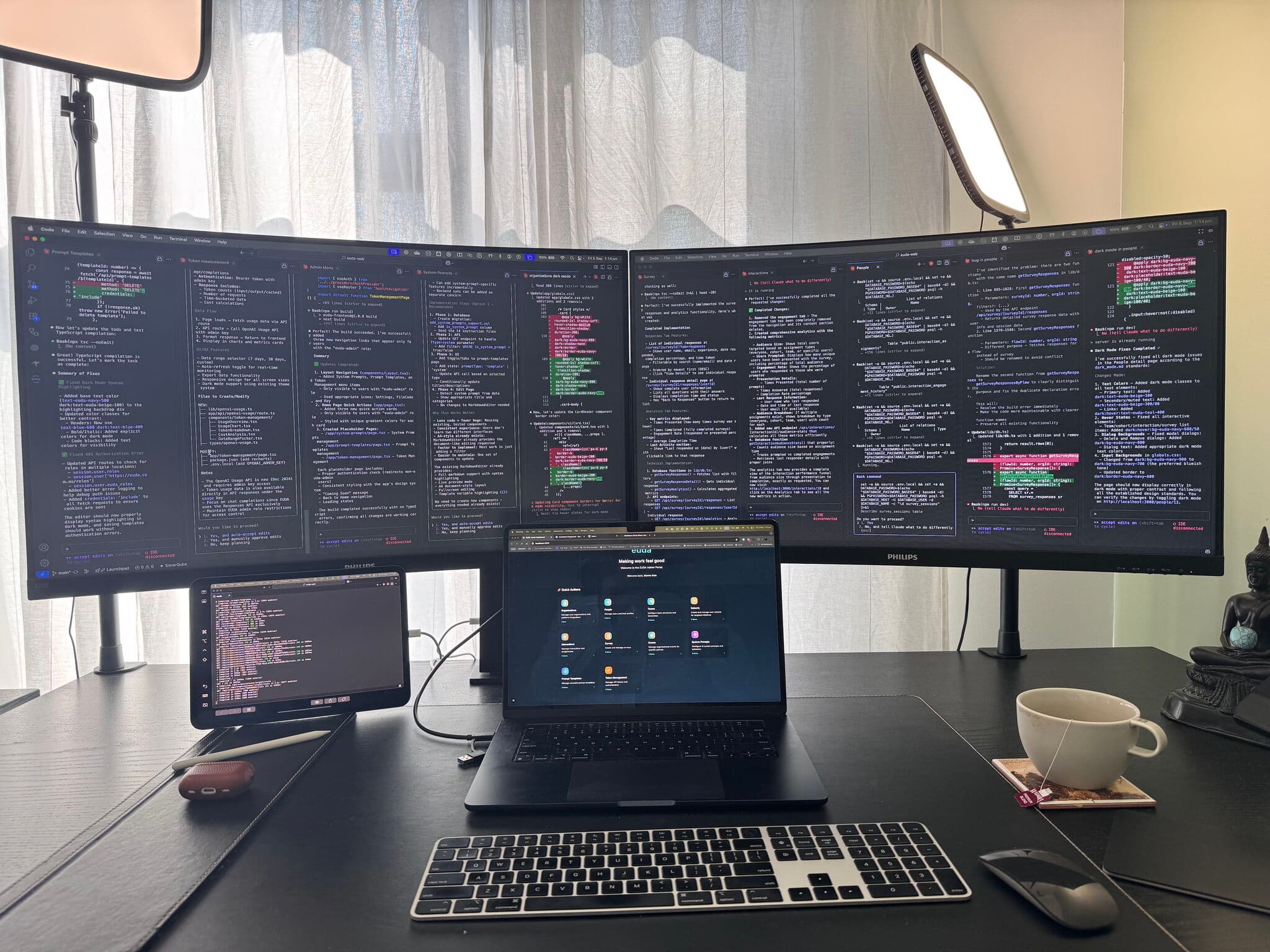
☕️🧘 Just another Friday in the cockpit, orchestrating a fleet of coding agents – some of them orchestrating their ow...
Shipping ~20× more, ~100× faster, with higher quality than my pre-AI baseline, under multiple strict quality gates.
Is AI just a bubble – or are the numbers telling us something else?
I keep seeing two stories in my feed: 1️⃣ We’re in an “everything bubble” fuelled by cheap money and debt. 2️⃣ AI is the new internet – huge adoption and revenue, not just hype.
Most “AI agents” today are passive.
On building autonomous agents (as a product, not coding agents): I’m partnering with Bia Affonso and Neu21 on Euda — a human-centred AI-powered wellbeing intelligence platform that helps people thrive and transforms workplace culture through continuous conversation while paying attention to wellbeing drivers and psychosocial hazards. A lot of “agents” today are passive — they only engage when the user engages, and they just respond to what has been prompted.
The third signal: 👇🏽
Agentic coding doesn’t trade speed for quality — it compounds them. The third and final part of this series shows any team can achieve and maintain auditable, enterprise-grade software quality with agentic coding — fast.
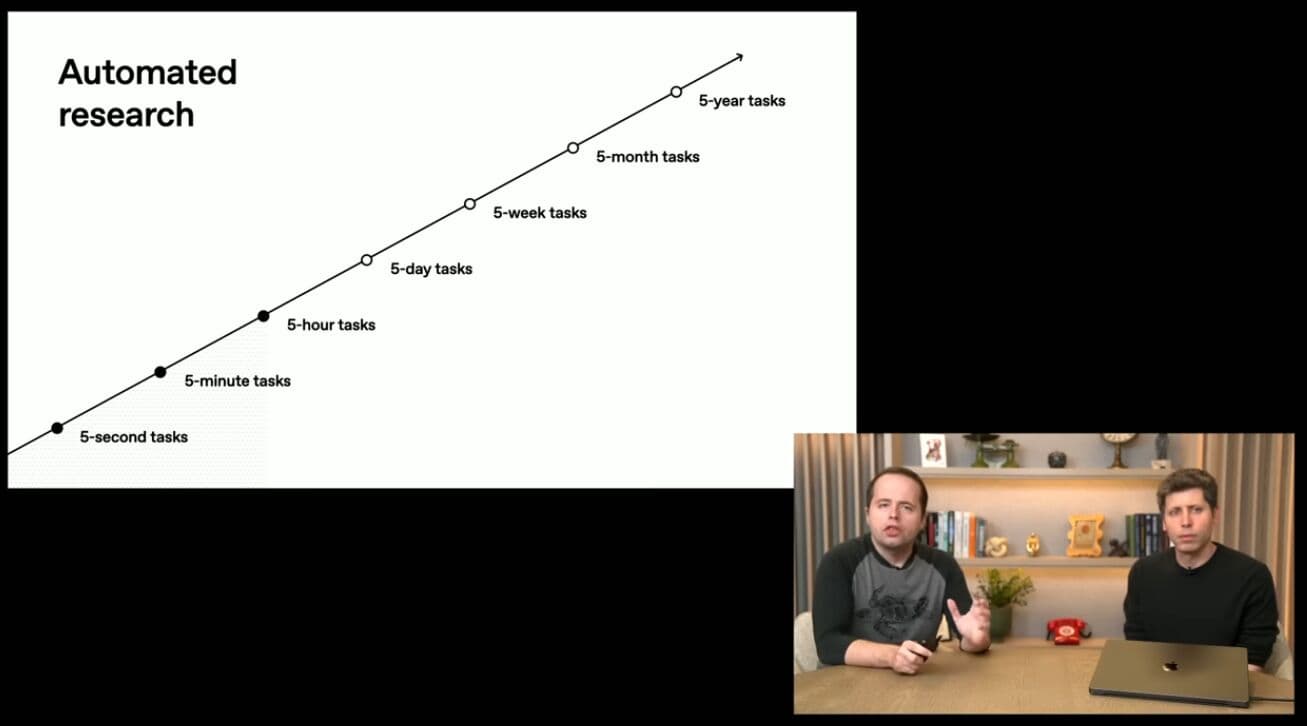
5-day tasks by September 2026.
OpenAI said today their models can now work autonomously and uninterrupted for ~5 hours. I believe that’s true—I’ve had sessions where agents ran on their own for nearly 2 hours.