🪦 That chart reads like a gravestone.
Stack Overflow didn’t “dip”. It effectively closed as a daily habit, and the timing lines up perfectly with AI going mainstream.
1 min read
Originally posted on LinkedIn · 17 reactions · 1 comments · View original →
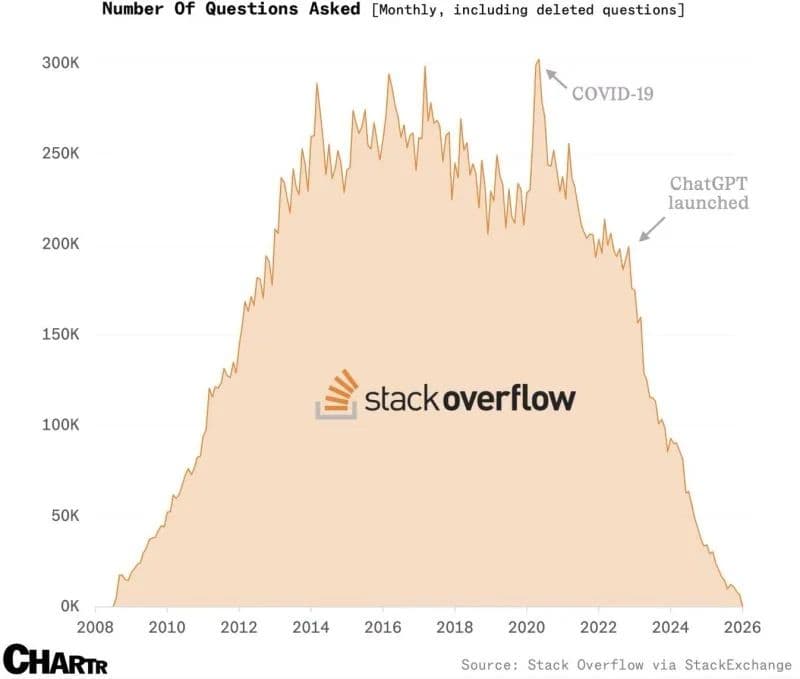
🪦 That chart reads like a gravestone.
Stack Overflow didn’t “dip”. It effectively closed as a daily habit, and the timing lines up perfectly with AI going mainstream.
For ~15 years, it was the default place developers went when they were blocked. Then, in late 2022 onwards, the curve breaks (the founders sold Stack Overflow in 2021 for $1.8b, just before the collapse. Good for them).
- ️ Stack Overflow won’t be the last.
- ️ SaaS is in for a tough ride this year
🌶️ If I were the CTO of a medium-sized organisation, I'd already be executing a deliberate cost-out initiative from the Office of the CTO:
- Pull the complete list of software subscriptions
- Sort by annual cost (high → low)
- Select a handful of prime candidates
- Build internal replacements
- Decommission and lock in savings, including build cost + total cost of ownership
You don’t need to boil the ocean. A few decommissions can fund the capability, then the flywheel starts.
What’s on your subscription list that won't survive the next 24 months?