Flow Efficiency, common sources of waiting time
Stop looking to the people; Start looking to the work
2 min read
Originally posted on Medium · View original →
Stop looking to the people; Start looking to the work
In part I, Flow Efficiency, a Health-System parable, we explored the relationship of resource utilisation and flow efficiency.
On average, in knowledge work, all pieces of work idle in queues for about 85% of time. That’s a critical issue not yet well understood in the industry.
The status quo still having people working close to 100% utilisation, in multiple things ‘at the same time’, context switching and procrastinating.
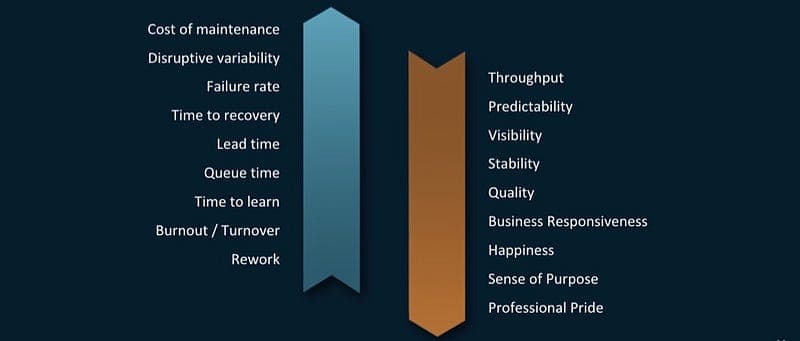
The result is catastrophic, usually leading to long lead times causing low productivity and quality. Teams don’t deliver as expected and when they do deliver, issues start to pop up everywhere, creating disruptive variability.
That ruins the trust, creates a culture of urgency and voila! The vicious cycle is in place and start to low burn your people, your culture and your customers.
Common causes of low flow efficiency
What causes low flow efficiency has to do with the way of working:
How the value stream is Organiser
Silos
Team structure
Skill matrix
Lack of automation
If you liked it, write a comment below with kudos, question or observation. If you‘re interested in this topic, visit the Elabor8 website, or reach out to me at marcio at elabor8 dot com dot au.
Till the next time!
Marcio Sete
Elabor8 is a consulting company that speeds the creation of customer value through a focus on people, teams and organisational Agility. We concentrate on building knowledge, uplifting capability and identifying efficiency improvements across technology, product innovation and design, Agile delivery and advisory. For more information visit elabor8.com.au